
Pro League Soccer
Rasu GamesSports
3.82.58K Reviews
- Version
- 1.0.45
- Installs
- 100.00M
- Age Rating
- Everyone
Screenshots
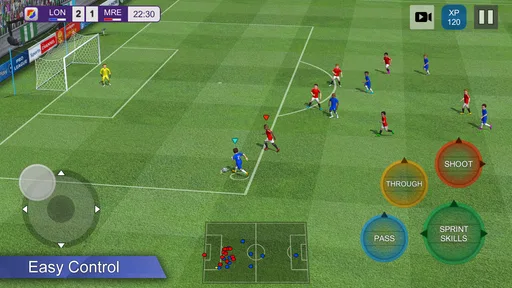
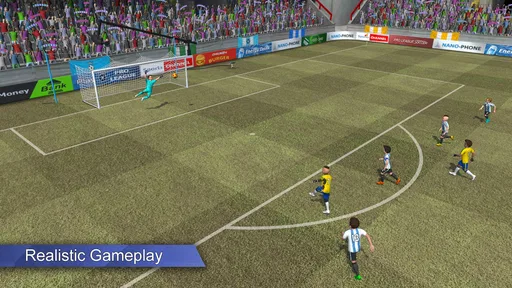
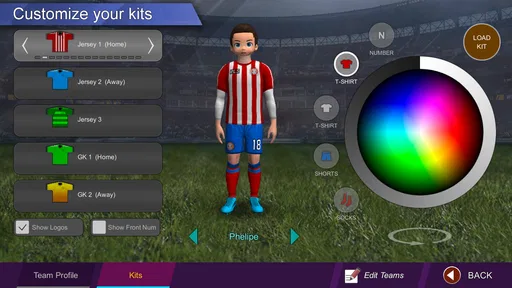
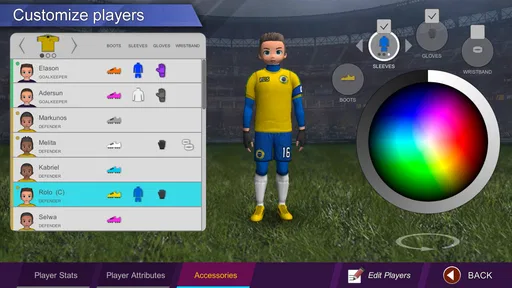
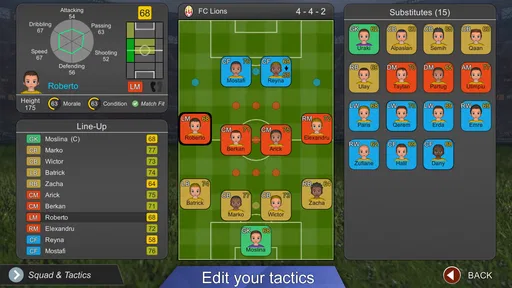
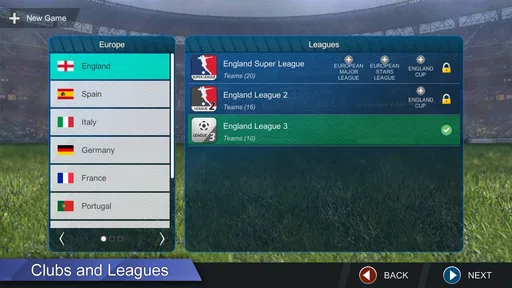
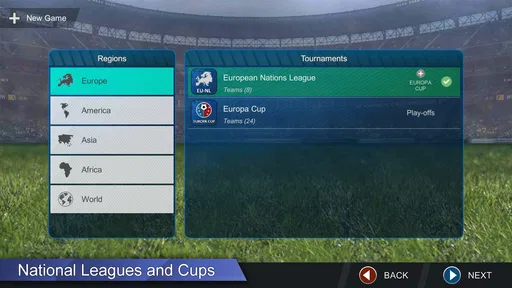
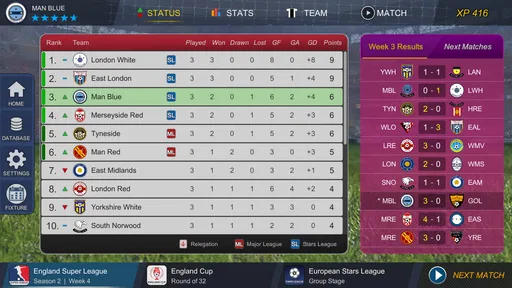
Our Review of Pro League Soccer
 Analysis by Appyee
I went into Pro League Soccer expecting a quick mobile football game, and that is exactly where it makes the strongest first impression. It is easy to start, familiar enough for anyone who has played a football game before, and free to download. After spending time with it, I found that its appeal depends less on presentation and more on whether you enjoy repeating matches, improving your control, and working through the game’s sense of progression.
That distinction matters. This is not the kind of football experience I would choose when I want the depth, licensing polish, or highly detailed management options associated with larger console-style alternatives. Instead, I see it as a practical pick for short sessions on an Android device, especially when I want to play rather than read menus or build a complicated club structure.
How the first matches create momentum
The opening appeal comes from the basic football loop. I can get into a match quickly, make attacking decisions, defend space, and see the result of my choices without needing to understand a large collection of systems first. That straightforward start is important on mobile, where a game has to earn attention within a few minutes.
My first useful goal in a game like this is not always the one that appears on the scoreboard. It is learning how the controls respond when I am moving toward the box, trying to pass under pressure, or attempting to recover after losing possession. Pro League Soccer gives the early matches value because they act as a practical introduction rather than forcing me to master everything before playing properly.
I also like that the early experience encourages experimentation. A new player can try safer passes, carry the ball forward, or take a more direct approach and quickly see which habits create chances. That makes the first sessions feel active instead of tutorial-heavy. The game’s store summary calls it a mobile football game, but that label does not explain the most useful part: it is accessible enough to make the first few matches feel immediately playable.
At the same time, the simple entry point can expose a limitation. Players who expect a highly realistic simulation may find the opening minutes too basic. The game does not appear designed to overwhelm you with tactical detail at the start, so anyone looking for a deep coaching layer or a large amount of pre-match preparation may feel that the experience is lighter than expected.
What I learned by playing instead of rushing
One practical tip is to treat the first matches as control practice, not merely as attempts to win. I found it more useful to notice which attacks began with enough space and which ones collapsed because I forced the ball forward. That approach makes later matches less frustrating because I was improving a repeatable habit rather than hoping that a single spectacular move would solve everything.
Another useful habit is to avoid treating every possession as an urgent attack. On a small screen, it is tempting to keep moving toward the opponent’s goal, but slowing down can reveal safer options. This is especially relevant for players who come from arcade football games and expect constant forward momentum. Pro League Soccer feels more rewarding when I give myself time to read the situation.
The game is also a reasonable fit for everyday gaps in the day. I can imagine playing a match while waiting for an appointment or taking a short break, then putting the phone away without needing to commit to a long session. That convenience is one of its clearest strengths, although players who prefer long-form competitive sessions may eventually want more variety than this format provides.
Progress signals that make matches feel worthwhile
Football games need some kind of forward movement, even when the match itself is enjoyable. In my experience, Pro League Soccer works best when I use each game as a small test of improvement. Better decisions, cleaner attacks, and fewer defensive mistakes become their own progress signals, particularly when the game does not bury that feeling under excessive complexity.
The appeal of unlocking or moving forward is strongest when it gives me a reason to return with a specific goal. I might begin a session wanting to win more consistently, handle pressure better, or make my attacks less predictable. That is a healthier form of progression than simply playing without a plan, because it turns a short match into a focused exercise.
I would not describe the pacing as endlessly surprising. Once the basic rhythm becomes familiar, the game’s long-term pull depends heavily on how much I enjoy repeating that rhythm. This is where individual preference becomes decisive. Someone who likes gradual improvement in a compact sports game may find the structure satisfying, while someone who needs constant new modes, dramatic rewards, or a large narrative framework may lose interest sooner.
The developer, Rasu Games, has positioned the title as a focused football experience rather than an enormous sports platform. That focus helps the game remain approachable, but it also means that the feeling of progress comes mainly from playing better and continuing through the available structure. I would recommend setting personal targets instead of expecting the game to provide a new reason to play after every match.
Small goals I found more useful than chasing everything
A good workflow is to choose one skill for a session. For example, I might concentrate on keeping possession until a clear opening appears, then switch focus in the next session to defending after a failed attack. This prevents the matches from blending together and gives me a way to judge improvement even when the final result is disappointing.
I also suggest paying attention to how a win was achieved. A narrow victory built on rushed decisions may not teach as much as a loss in which I created better chances and defended more intelligently. That mindset makes the progression feel less dependent on a streak of favorable results. It is particularly useful for new players who might otherwise assume that losing means the game is unfair or that they need to change everything at once.
For players who want a very visible reward ladder, this may feel less immediately satisfying than a game built around constant unlock notifications. I prefer the quieter approach when I am looking for a football game rather than a reward machine, but I understand why some people will want stronger signals after every session.
Where the difficulty curve becomes meaningful
The challenge in Pro League Soccer is most interesting when it exposes poor habits. If I rush an attack, leave space behind the ball, or rely on the same approach repeatedly, the match can become harder for reasons that feel connected to my decisions. That is a better kind of difficulty than simply making opponents seem stronger without giving me anything to learn.
New players should expect a short adjustment period. The controls may feel familiar, but familiarity is not the same as precision. Passing direction, timing, and defensive positioning all matter more once the easy opportunities stop appearing. I found that the game became more enjoyable when I accepted that a failed attack was information rather than an immediate reason to restart.
The curve can also create friction for casual players. Someone opening the game for a very relaxed football session may not want to analyze mistakes or repeat matches until a particular weakness improves. In that case, the title may feel demanding despite its simple presentation. It is free and rated for Everyone, which makes it approachable for a broad audience, but an age rating does not guarantee that every player will enjoy the same level of challenge.
My advice is to change one decision at a time. If I started passing earlier, defended more patiently, and stopped forcing shots all in the same match, I would not know which adjustment helped. Focusing on one change made the difficulty curve easier to understand and kept the learning process from becoming tiring.
Who will enjoy the challenge and who may not
This game suits players who enjoy football through repeated practice. It is a good match for someone who wants to improve gradually, play in short bursts, and accept that progress may come from understanding situations rather than collecting elaborate rewards. It also works for people who want a sports game that can be picked up without a long explanation.
I would be more cautious recommending it to a player who wants a full club-management experience. If your favorite part of football games is negotiating transfers, managing detailed finances, planning a season in depth, or following a large story around a team, this is probably not the right primary choice. A dedicated management game would serve that audience better.
Likewise, players who judge a football game mainly by presentation may prefer a more ambitious alternative. Pro League Soccer’s strongest argument is its playable match loop, not the promise of a massive simulation package. I think it is better to approach it as a compact football game than as a replacement for every type of sports title.
Retention pressure and the question of staying power
The game has attracted a large audience, with over one hundred million installs and an average rating of 3.8 from around four hundred fifty-five thousand ratings. Those figures suggest that the basic idea works for many mobile players, but they do not remove the need to decide whether its pacing fits your own habits. Popularity can tell me that the game is worth investigating; it cannot guarantee that I will enjoy repeating its matches.
For me, the strongest retention pressure comes from wanting to correct a mistake or test whether a better approach works. That is a positive reason to return because it is connected to play. The weaker reason would be opening the game only out of habit, especially after the matches begin to feel similar. When the personal challenge disappears, the compact structure becomes more noticeable.
This is where I think the game benefits from realistic expectations. It is free, so it is easy to try without making a financial commitment. I can install it for a quick test, play enough matches to understand the controls, and decide whether the progression keeps me interested. That low barrier makes it suitable for curious players, but it also means there is little reason to force myself to continue if the core rhythm does not click.
The current version is 1.0.45, and the game supports devices running Android 5.1 or later. That broad compatibility is useful if I am playing on an older phone rather than a recent flagship. Still, hardware age can affect how comfortable any mobile football game feels, particularly when the screen is small or touch input is less responsive. I would judge the experience on the device I actually plan to use, not on expectations formed from higher-end phones.
One everyday scenario shows the game at its best: I have ten minutes before leaving home, start a match, focus on one tactical habit, and stop after the final whistle. The session feels complete because I had a clear purpose. A less successful scenario is opening it during a long trip expecting hours of constantly changing content. In that situation, the repeated match structure may become less engaging than a deeper football simulation or a game with broader mode variety.
How it compares with familiar football alternatives
Compared with large, presentation-focused football games, Pro League Soccer feels easier to approach and less intimidating. I spend less time learning a huge ecosystem before I can enjoy a match. That makes it a better choice for someone who values immediate play and a smaller commitment.
Compared with arcade football games, it asks for more patience. I cannot rely only on speed or constant attacking pressure if I want consistent results. The trade-off is that successful plays feel more connected to reading the match and choosing a sensible moment, even if the overall package remains lighter than a full simulation.
Compared with football management games, it puts me closer to the action and farther from the office. I am making decisions during matches rather than spending most of my time arranging a squad or planning a season. Neither approach is automatically better; they satisfy different reasons for liking football. The important question is whether you want to control the play directly or manage the club from above.
That comparison also explains why I would not recommend replacing every football game with this one. It is a focused option, not an all-purpose answer. Its value comes from being available, understandable, and playable in short sessions, while other games will be stronger if you want depth in management, presentation, or long-term competitive structure.
My progression verdict after settling into the rhythm
After spending time with it, I see Pro League Soccer as a solid free sports game for players who want direct football action without a complicated entry process. The early goals are easy to understand, the difficulty gives practice a purpose, and the progression feels most convincing when I create my own short-term targets. Those qualities make it easy to recommend as a casual mobile football option.
The limitations are just as important. Its retention depends on enjoying repeated matches and gradual improvement. If you need a constant stream of new systems, a highly detailed club-management layer, or the presentation of a premium console-style game, you may reach its limits quickly. I would also avoid assuming that a broad audience and high install count automatically mean it will suit your preferred style.
Rasu Games has made a game that is simple to start but not entirely mindless to play. My best advice is to give it several focused sessions rather than judging it by one rushed match. Learn the controls, choose one improvement target, and notice whether the challenge makes you curious to try again. If it does, the free price and broad device support make it an easy addition to your phone.
My recommendation is straightforward: try it if you want accessible mobile football with a practice-driven sense of progress. Skip it if your priority is deep management, elaborate presentation, or endless variety. For the right player, its compact pacing is a strength; for everyone else, that same focus will reveal its boundaries fairly quickly.
With an Everyone content rating and a release dating from May 8, 2021, it remains an approachable choice for a wide range of players. I would describe it as a game to keep installed for quick matches and gradual improvement, not as the definitive football experience. That honest position is also why I think it is worth trying: the game makes its case through the feel of playing, and you can discover that fit without paying to begin.
Verdict
Strengths of Pro League Soccer
- Responsive controls make passing, shooting, and defending easy to learn.
- Large selection of teams and players adds variety to each season.
- Matches run smoothly on many mid-range Android devices.
- Offline play lets you enjoy games without a constant internet connection.
- Frequent match scenarios keep quick sessions entertaining.
Limitations of Pro League Soccer
- Some menus and player details feel less polished than premium soccer games.
- Opponent AI can behave predictably during certain defensive situations.
- Progress may require considerable time to unlock the best content.
- Ads can interrupt the experience, especially between matches.
- Limited licensing may result in generic team names and incomplete kits.
Other Releases by Rasu Games
View All
Pro Kick Soccer
Sports3.9
Similar Picks in This Category
View All
8 Ball Pool
Miniclip.com4.8

Pooking - Billiards City
AIM TOP GAME TECHNOLOGY LIMITED - pool4.6

Carrom Pool: Disc Game
Miniclip.com4.4

EA SPORTS FC Soccer Mobile 26
ELECTRONIC ARTS4.6

World Soccer League
mobirix4.3

Soccer Cup 2026: Football Game
INLOGIC SPORTS - football tennis golf soccer4.3
Frequently Asked Questions
What is Pro League Soccer?
Pro League Soccer is a mobile football game focused on quick matches, team management, and competitive soccer gameplay. It allows you to control players, build attacking plays, defend manually, and compete using clubs and national teams. The game is designed for Android and iOS users who want a more accessible football experience without needing a console or computer.
Can I play Pro League Soccer offline?
Pro League Soccer can generally be played without a constant internet connection for several core features, such as certain matches and single-player activities. However, online functions, updates, advertisements, rankings, and some account-related services may require internet access. Availability can vary by version and device, so it is best to connect occasionally to receive updates and synchronize progress.
Is Pro League Soccer free to download and play?
The game is normally available as a free download, allowing users to install it and start playing without an upfront purchase. Nevertheless, free-to-play elements may include advertising, optional purchases, or other limitations. Before downloading, check the store listing for the current pricing information, in-app purchase details, supported devices, and any regional restrictions that could affect your experience.
Does Pro League Soccer include real teams, players, and leagues?
Pro League Soccer may include recognizable football clubs, national teams, competitions, and player-inspired content, but licensing can differ from major console football titles. Some names, uniforms, logos, or player details may not be officially licensed in every region. If authentic branding is important to you, review the latest in-game team list and store description before installing.
What devices are required to run Pro League Soccer smoothly?
Performance depends on your phone or tablet’s processor, memory, operating system, and available storage. Recent mid-range devices should generally provide a smoother experience, while older or entry-level hardware may experience slower loading, reduced graphics quality, or occasional frame-rate drops. Keep the operating system updated, close background apps, and leave sufficient storage for updates and game data.
Play our best games!


